
Healthy Families Honduras Program Extends The Light
As our team continued to see the intersectionality between poverty and access to HIV medication and care, studies have shown that poverty and HIV are the #1 and #2 leading causes as to why a child is placed into institutional care in Honduras. So, Healthy Families Honduras, launched in 2018, strives to intervene proactively to keep families together. Our team receives referrals with our partners at Servicio de atención integral (SAI), the Honduran national HIV care network, of famliies most at risk of separation to set up regular home visits and case planning. To date, the program has helped prevent at least 55 children from being sent to an orphanage or institutional care center, with over 100 families served through the innovative program.
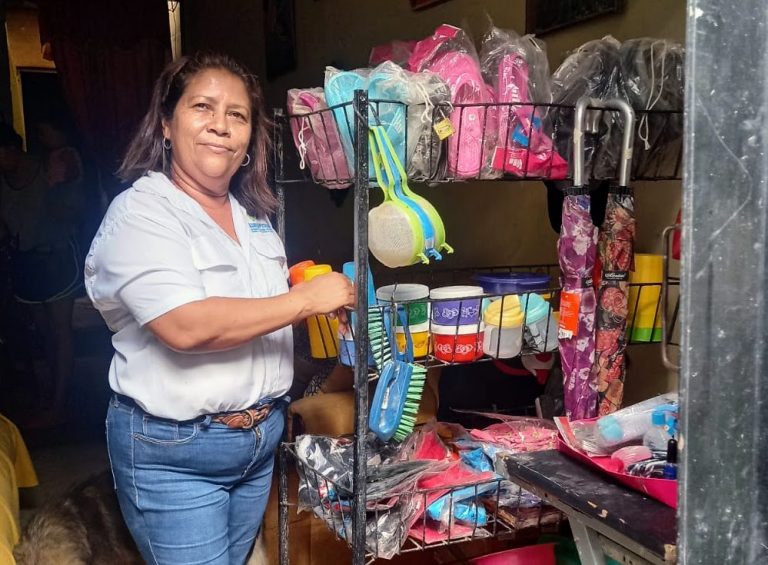
Through your generosity, families in the program receive a small monthly stipend, regular home visits, and educational and mental health support. Additionally, over 35 families have been able to open a small-business from their home, meaning parents no longer have to choose between child care and going to work. One recipient, pictured below, opened a general store to generate income for her family. The benefit of these businesses is their sustainability, with 20 families’ businesses graduating from the program, meaning they saw sustainable revenue long-term.
How The Healthy Families Honduras Program Works
The Healthy Families Honduras program identifies vulnerable families in communities surrounding our children’s home who are at risk of separation due to poverty, illness or lack of resources. Our social worker and other team members conduct regular home visits to assess needs and provide guidance.
Our Mountain of Light staff have contact with many families in various parts of Honduras. Some are relatives of youth who live at our children’s home. Others have some connection to MdL or may be struggling economically while living with HIV. Hospital and clinic staff in nearby communities sometimes make connections between families and Montaña de Luz.
MdL staff will determine the type of support and what works best for each family. Sometimes, it’s a monthly stipend to help meet basic needs. Other times, MdL can help an adult learn the skills to start a small business such as a sundries shop, food stand or used clothing store. In some cases, MdL can purchase a small appliance or piece of equipment that helps a family dramatically increase its output, especially in making tortillas for a food stand. Families in the program find that they often can stay together and become self-sufficient economically.
All of this work takes place against a challenging backdrop of complex issues connected with HIV/AIDS in Honduras.